
Dillon Cole || Scorpion Shard (![[personal profile]](https://www.dreamwidth.org/img/silk/identity/user.png) orderfromchaos) wrote2012-04-14 04:53 am
orderfromchaos) wrote2012-04-14 04:53 am
orderfromchaos) wrote2012-04-14 04:53 am


Jarjammed App
PLAYER INFO:
Name: Isabelle
Preferred pronoun: She
Preferred means of contact: For plotting, shipoftheseus on plurk or vibishantheshiny on AIM; for mod notices, PMing the journal is fine.
Any other characters currently in-game? nope!
CHARACTER INFO
Name: Dillon Cole
Gender: Male
Source: The Scorpion Shards Trilogy
Canon point: Partway through Thief of Souls, after Dillon has set up at Hearst Castle with his Happy Camper cultists. (After receiving the disks, he orders all of them out before starting to play. They obey.)
Age: 16
Colour: 0e4603
Chumhandle: enthalpicPerpetuity
History: Seventeen years ago, the star Mentarsus-H*, from the constellation Scorpios, went supernova. The soul of the star splintered into six brilliant, unequal pieces, each of them attaching themselves to a new life being conceived at that very moment on a little blue planet only 14-odd lightyears away: the six Scorpion Shards.. One of those tiny, shining lives – the one that anchored the very largest, strongest, and brightest core of the old star – would grow into the boy Dillon Cole.
The first 14 years of Dillon’s life were remarkably ordinary. He was an only child of Catholic parents living in Arizona. His parents doted on him, he did well in school, and loved to rollerblade. However, as the light from the death of star that created him began to reach earth, things began to go wrong. The huge, powerful souls of the Shards attracted parasites that fed on the power of these exceptional souls as they manifested, warping their abilities into monstrous and dangerous forms.
Anyone Dillon touched suffered a brief but profound break in their mental state, forgetting what they were doing and even who they were. Although most people would recover, his parents touched Dillon most often, and by the time he realized what was happening, it was too late: they had become vegetables. Dillon left home and traveled to California, living on stolen food and by hustling pool. His parasite fed on destruction, urging Dillon to use his powers to break things. This urging expressed itself as a terrible, aching hunger that only relented when the parasite was sated, and then only briefly. As the parasite grew, so did the hunger; from a psychological standpoint, Dillon’s experience reads almost exactly like addiction.
He did his best to mitigate the damage his hunger demanded, escalating slowly to bigger and bigger acts of destruction. He tried to use his ability to understand how consequences would unravel in order to keep anyone from being hurt, but he was very new with his powers, and sometimes he miscalculated. Once he caused a massive pile-up car-crash. It should have had few casualties, but he didn’t anticipate that a single crucial truck driver was left-handed, and veered the opposite direction from his expectations. Dozens of people were hurt, including Deanna Chang, another Shard who was plagued with constant terror of everything, except when she was causing fear in others.
Dillon felt horribly guilty about the damage he caused, and he went to church afterwards to confess every time. The priest he confessed to, unfortunately, grew more and more disturbed by Dillon’s escalating crimes, his insistence that he was driven to perform them satisfy the wrecking-hunger, and his fear at the way the hunger continued to grow. After the car crash, he told Dillon that he needed a psychiatrist, not a priest. Dillon interpreted this as denial of absolution. He was furious, terrified, distraught, certain he would be damned. Before leaving town, he visited Deanna in the hospital to make a futile apology. They realized that they were two of a kind, and he convinced her to run away with him.
Deanna and Dillon are literally soulmates, the two greatest parts of the same soul, and they quickly become incredibly codependent. Deanna doesn’t need to be afraid with Dillon to protect her, and she can feed her parasite with the fear that results from Dillon’s increasing catastrophes. Meanwhile, Dillon can live with his actions as long as he has one person who forgives him, needs him, and cares for him in spite of what he’s done. However, they’re teenagers, and they still have doubts and insecurities. Deanna worries about Dillon, about what he’ll do, and whether he really needs her like she needs him – or if it’s good for her to need him so much at all. Dillon feels threatened by her doubts, and abruptly changes their course: instead of moving toward the remaining for Shards, they head away from them. Around this time, Dillon learns how to break not only physical systems but also people, first one-on-one and soon throwing an entire town into raving, violent chaos with a single well-placed sentence.
The other Shards, weighed down by their own montrosities but close on his tail, almost die in a massive collapse of skyscrapers in downtown Boise. Terrified of perishing along with their hosts, these four parasites abandon them, taking root in Dillon instead. Suddenly burdened with new horrors, and with his own hunger grown far out of control, Dillon searches for the right chain of dominoes to tip over to destroy the entire world – and he finds it.
Fortunately, before he can set off the irrevocable chain reaction, the other Shards catch up to him, and threaten to kill him. Once again the parasites run in the face of death, tearing a hole in the fabric of the world and fleeing to a strange un-world between universes, a place of strange detritus and endless red sands. There, the six shards each do battle with their parasites, and five of them overcome them. The Spirit of Destruction plays on Dillon’s hubris and anger, and tricks him into one last destructive act, an attack which the parasite reroutes into Deanna. She dies, and Dillon is unable to save her. The five remaining shards escape back to Earth before the hole repairs itself.
The other shards reject Dillon, and split up to find their families and try to reclaim their lives. Dillon, with nothing to return to, devotes himself to figuring out the proper use of his abilities, trying to atone for his crimes by fixing everything that he broke. This becomes a much more reasonable ambition when he begins to succeed in reviving the dead, starting with all those that he killed. It’s harrowing work, but he perseveres. He pours his grief and guilt into reconstruction, hoping it will erase at least some of what he’s done.
There’s one hitch: the people he brings back from death or vicious madness largely don’t want to go back to their old lives. They are in awe of him, this serious boy who works miracles and can see into their souls, and they only want to follow and serve him, and Dillon can’t figure out how to make them leave. Eventually, he stops fighting them, rationalizing that it will be easier to repair his destruction with others to help. They bring him to Hearst Castle, and anyone who objects is drawn into the orbit of Dillon’s growing cult. Canonically, Dillon has a computer there from which he researches patterns in the world to make sure everything is going okay. When he receives the disks and the cry for help, it feels like something he can actually accomplish, unlike his frustratingly obstructive self-appointed atonement. He orders his followers out of the Castle on a pretext to fetch him things, and connects the session.
*This is not a real star, the author made it up. The only things we know for sure about it, astronomically speaking, are that it was large enough to go supernova, and that it was green. This is complicated by the fact that stars cannot actually be green, as a function of their heat curves.
Personality: Dillon is a lost, lonely little kid with too much blood on his hands. Between his parents and Deanna, he’s inadvertently killed everyone he’s ever really loved, and a whole lot of other people besides. He’s a being whose very existence imposes order on the universe, and yet he has a terrible swathe of chaos left in his wake.
He was fourteen when the world started going crazy around him, he was alone and on the streets by fifteen, and despite his incredible powers, he’s felt completely out of control for most of that time. A great deal of Dillon’s decisions, for good or bad, are motivated by an attempt to regain control over his own life. While the parasite was riding him, it definitely called the shots, but Dillon clawed for every scrap of discretion he could get. Once he destroys an entire town – except for a single block, and he gleefully informs Deanna that the hunger wanted the whole town, but Dillon denied it, Dillon chose the exact trigger that would bring most of the city into seething civil war, but leave at least that one spit of suburbia unscathed. He is afraid of losing Deanna to forces outside his control if they meet the other shards, so he turns away fro them.
Dillon was raised Catholic, and although he looses a lot of his faith after the Priest refuses his confession, guilt still has a strong hold on him. He desperately wants to be a good person; he honestly doesn’t believe that he can, but he’s determined to try anyway. He chooses not to bring his parents back from the dead, knowing it would be a selfish act for his own comfort rather than for their sake, and selfish given all the work he has to do to help those still alive. He’s a profoundly good person with way more power than he knew what to do with and without the strength to resist the evil forces preying on him, who has committed terrible crimes. He’s grieving, but he has found the strength to accept what he’s done, and carry it honestly.
Dillon will listen if someone seems like moral guide, which can make him very easy to manipulate, and several times in the books he listens to adults he probably shouldn’t because he doesn’t know what to do - but knowing the power he wields, he is incapable of doing nothing in the face of suffering, even if historically he hurts as much as he helps. He firmly believes he has to try.
Even though he wants to trust someone else’s judgement, Dillon is neither a coward nor a pushover: when Okaya gives him an ultimatum, he refuses to sacrifice a few from the supposed good of the many, confronting some of his worst fears (in the form of his old parasite) and giving up a chance to resurrect Deanna just to find a third way, trick Okaya, and keep Earth safe. He has a temper, but since it cost him Deanna, he works hard to keep it under control.
Ultimately, in spite of everything he’s been through and everything he’s capable of, he’s still a teenager. Sometimes his power goes to head. He likes to show off, he likes to impress people, and when he isn’t crushed under the weight of guilt and grief, he’s actually kind of a snarker. He has the playfully rough manner of a boy who grew up too fast, but there’s no real meanness in it.
Abilities & physical limitations: Dillon’s basic ability is to manipulate or reverse entropy, the force of decay in the universe. Entropy is the universal law that says that without more energy, systems become more disordered and chaotic. Around Dillon, this ceases to be true. Patterns appear out of random chance. Old things become new. Columns of water retain their cohesion even after the glass that holds them has been shattered, and rivers flow uphill. (All canon examples.) Although he can focus this phenomenon voluntarily, it still happens at a baseline level around him whether he wants it too or not. Touch seems to make it stronger.
The way his powers work is completely tied into cause and effect, the stability of structures in physical space and through time. If he looks at anything in the right way, he can learn a great deal about it, understanding the causes that shaped it in exactly that way, and he can see the multiplication of possible futures, and what it would take to bring about a particular one. The only real limits to this are his own perception of his powers: he has to be able to rationalize the information his powers are trying to give him by saying he can interpret it from some twitch or cadence or crevice. Otherwise, his human mind doesn’t accept it. The more blasé he becomes with his powers, the more directly he can know things; I’m taking him from fairly early on, so he will have to study things closely to find out about them, the extent of his knowledge will be limited, and he will sometimes make mistakes.
This ability applies to people: he can look at someone and know things about their past, everything from why they are the way they are to what color car they drive. With a little more effort, he can see exactly what to say to bring them peace, or send them off the deep end. This is something he really hates doing and will deliberately avoid in game, and even if somehow it did come up, I would never dream of doing it without OOC permission.
He can do it to physical things as well, finding the exact fault line that will turn an ordered system into chaotic rubble. At the end of the second book, he taps the Hoover Dam in just the right place with a pebble three times, sending resonances through the whole structure and causing it to completely disintegrate a few hours later. He even shatters a glass without touching it, simply destroying it’s patterns with his anger, however this is something he never does again; I think this is another case of his own perceptions limiting what his power is capable of. He won’t do that in game either.
Dillon can fix anything that is broken as long as he has all the parts, but he can’t replace anything that is missing. He can heal wounds, but not disease. In canon he can resurrect dead bodies and cannot die permanently himself, but in game he’ll lose both of those abilities.
Appearance: Dillon is an average-looking white teenager with red hair and very neat clothes.
Notable AU differences from canon, if applicable:
Strife Specibus: Cuekind, as in, a pool cue. There’s a billiards room in the Castle, and Dillon is a bit of a pool shark, given that his abilities give him completely command of such a simple system of cause and effect.
Prototyping: A bust of Robespierre that he finds around the Castle. His imps will have powdered wigs and curse in French. His sprite will be somewhat conniving and very persuasive when he wishes to be.
Title: Aeon of Order
In-game abilities: HAHA no he doesn’t need any more, really. If he progresses in the game, I’d like for him to gain greater control over his abilities, particularly the ability to rein in his involuntary bubble of neatness and rejuvenation and patterns appearing out of randomness.
Planet: The Land of Steel and Lattice
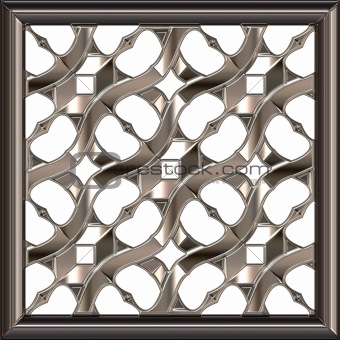
LOSAL is a grim, quasi-futuristic urban planet that looks something like this. The primary building blocks of the massive city complex are small interconnected rooms made entirely out of intricate steel grating (it looks kind of like this). Pigeon consorts in business attire slave away in these cubicles, or else rush fearfully from section to section, delivering paperwork or pecking one another to do it faster, like something out of 1984 done entirely in grayscale and metal. The cubicles and various other structures are stacked into towers and also extend three-dimensionally through the planet’s core. The cubicles also move sometimes, manipulated by vast and hideously complex internal machinery. Gleaming maglev trains rush through chutes as they become available with little warning. At the center of the planet, the denizen Ahriman is rumored to see and control every technical twitch and bloody accident.
RP Sample: http://bakerstreet.dreamwidth.org/143727.html?thread=104725615#cmt104725615
Name: Isabelle
Preferred pronoun: She
Preferred means of contact: For plotting, shipoftheseus on plurk or vibishantheshiny on AIM; for mod notices, PMing the journal is fine.
Any other characters currently in-game? nope!
CHARACTER INFO
Name: Dillon Cole
Gender: Male
Source: The Scorpion Shards Trilogy
Canon point: Partway through Thief of Souls, after Dillon has set up at Hearst Castle with his Happy Camper cultists. (After receiving the disks, he orders all of them out before starting to play. They obey.)
Age: 16
Colour: 0e4603
Chumhandle: enthalpicPerpetuity
History: Seventeen years ago, the star Mentarsus-H*, from the constellation Scorpios, went supernova. The soul of the star splintered into six brilliant, unequal pieces, each of them attaching themselves to a new life being conceived at that very moment on a little blue planet only 14-odd lightyears away: the six Scorpion Shards.. One of those tiny, shining lives – the one that anchored the very largest, strongest, and brightest core of the old star – would grow into the boy Dillon Cole.
The first 14 years of Dillon’s life were remarkably ordinary. He was an only child of Catholic parents living in Arizona. His parents doted on him, he did well in school, and loved to rollerblade. However, as the light from the death of star that created him began to reach earth, things began to go wrong. The huge, powerful souls of the Shards attracted parasites that fed on the power of these exceptional souls as they manifested, warping their abilities into monstrous and dangerous forms.
Anyone Dillon touched suffered a brief but profound break in their mental state, forgetting what they were doing and even who they were. Although most people would recover, his parents touched Dillon most often, and by the time he realized what was happening, it was too late: they had become vegetables. Dillon left home and traveled to California, living on stolen food and by hustling pool. His parasite fed on destruction, urging Dillon to use his powers to break things. This urging expressed itself as a terrible, aching hunger that only relented when the parasite was sated, and then only briefly. As the parasite grew, so did the hunger; from a psychological standpoint, Dillon’s experience reads almost exactly like addiction.
He did his best to mitigate the damage his hunger demanded, escalating slowly to bigger and bigger acts of destruction. He tried to use his ability to understand how consequences would unravel in order to keep anyone from being hurt, but he was very new with his powers, and sometimes he miscalculated. Once he caused a massive pile-up car-crash. It should have had few casualties, but he didn’t anticipate that a single crucial truck driver was left-handed, and veered the opposite direction from his expectations. Dozens of people were hurt, including Deanna Chang, another Shard who was plagued with constant terror of everything, except when she was causing fear in others.
Dillon felt horribly guilty about the damage he caused, and he went to church afterwards to confess every time. The priest he confessed to, unfortunately, grew more and more disturbed by Dillon’s escalating crimes, his insistence that he was driven to perform them satisfy the wrecking-hunger, and his fear at the way the hunger continued to grow. After the car crash, he told Dillon that he needed a psychiatrist, not a priest. Dillon interpreted this as denial of absolution. He was furious, terrified, distraught, certain he would be damned. Before leaving town, he visited Deanna in the hospital to make a futile apology. They realized that they were two of a kind, and he convinced her to run away with him.
Deanna and Dillon are literally soulmates, the two greatest parts of the same soul, and they quickly become incredibly codependent. Deanna doesn’t need to be afraid with Dillon to protect her, and she can feed her parasite with the fear that results from Dillon’s increasing catastrophes. Meanwhile, Dillon can live with his actions as long as he has one person who forgives him, needs him, and cares for him in spite of what he’s done. However, they’re teenagers, and they still have doubts and insecurities. Deanna worries about Dillon, about what he’ll do, and whether he really needs her like she needs him – or if it’s good for her to need him so much at all. Dillon feels threatened by her doubts, and abruptly changes their course: instead of moving toward the remaining for Shards, they head away from them. Around this time, Dillon learns how to break not only physical systems but also people, first one-on-one and soon throwing an entire town into raving, violent chaos with a single well-placed sentence.
The other Shards, weighed down by their own montrosities but close on his tail, almost die in a massive collapse of skyscrapers in downtown Boise. Terrified of perishing along with their hosts, these four parasites abandon them, taking root in Dillon instead. Suddenly burdened with new horrors, and with his own hunger grown far out of control, Dillon searches for the right chain of dominoes to tip over to destroy the entire world – and he finds it.
Fortunately, before he can set off the irrevocable chain reaction, the other Shards catch up to him, and threaten to kill him. Once again the parasites run in the face of death, tearing a hole in the fabric of the world and fleeing to a strange un-world between universes, a place of strange detritus and endless red sands. There, the six shards each do battle with their parasites, and five of them overcome them. The Spirit of Destruction plays on Dillon’s hubris and anger, and tricks him into one last destructive act, an attack which the parasite reroutes into Deanna. She dies, and Dillon is unable to save her. The five remaining shards escape back to Earth before the hole repairs itself.
The other shards reject Dillon, and split up to find their families and try to reclaim their lives. Dillon, with nothing to return to, devotes himself to figuring out the proper use of his abilities, trying to atone for his crimes by fixing everything that he broke. This becomes a much more reasonable ambition when he begins to succeed in reviving the dead, starting with all those that he killed. It’s harrowing work, but he perseveres. He pours his grief and guilt into reconstruction, hoping it will erase at least some of what he’s done.
There’s one hitch: the people he brings back from death or vicious madness largely don’t want to go back to their old lives. They are in awe of him, this serious boy who works miracles and can see into their souls, and they only want to follow and serve him, and Dillon can’t figure out how to make them leave. Eventually, he stops fighting them, rationalizing that it will be easier to repair his destruction with others to help. They bring him to Hearst Castle, and anyone who objects is drawn into the orbit of Dillon’s growing cult. Canonically, Dillon has a computer there from which he researches patterns in the world to make sure everything is going okay. When he receives the disks and the cry for help, it feels like something he can actually accomplish, unlike his frustratingly obstructive self-appointed atonement. He orders his followers out of the Castle on a pretext to fetch him things, and connects the session.
*This is not a real star, the author made it up. The only things we know for sure about it, astronomically speaking, are that it was large enough to go supernova, and that it was green. This is complicated by the fact that stars cannot actually be green, as a function of their heat curves.
Personality: Dillon is a lost, lonely little kid with too much blood on his hands. Between his parents and Deanna, he’s inadvertently killed everyone he’s ever really loved, and a whole lot of other people besides. He’s a being whose very existence imposes order on the universe, and yet he has a terrible swathe of chaos left in his wake.
He was fourteen when the world started going crazy around him, he was alone and on the streets by fifteen, and despite his incredible powers, he’s felt completely out of control for most of that time. A great deal of Dillon’s decisions, for good or bad, are motivated by an attempt to regain control over his own life. While the parasite was riding him, it definitely called the shots, but Dillon clawed for every scrap of discretion he could get. Once he destroys an entire town – except for a single block, and he gleefully informs Deanna that the hunger wanted the whole town, but Dillon denied it, Dillon chose the exact trigger that would bring most of the city into seething civil war, but leave at least that one spit of suburbia unscathed. He is afraid of losing Deanna to forces outside his control if they meet the other shards, so he turns away fro them.
Dillon was raised Catholic, and although he looses a lot of his faith after the Priest refuses his confession, guilt still has a strong hold on him. He desperately wants to be a good person; he honestly doesn’t believe that he can, but he’s determined to try anyway. He chooses not to bring his parents back from the dead, knowing it would be a selfish act for his own comfort rather than for their sake, and selfish given all the work he has to do to help those still alive. He’s a profoundly good person with way more power than he knew what to do with and without the strength to resist the evil forces preying on him, who has committed terrible crimes. He’s grieving, but he has found the strength to accept what he’s done, and carry it honestly.
Dillon will listen if someone seems like moral guide, which can make him very easy to manipulate, and several times in the books he listens to adults he probably shouldn’t because he doesn’t know what to do - but knowing the power he wields, he is incapable of doing nothing in the face of suffering, even if historically he hurts as much as he helps. He firmly believes he has to try.
Even though he wants to trust someone else’s judgement, Dillon is neither a coward nor a pushover: when Okaya gives him an ultimatum, he refuses to sacrifice a few from the supposed good of the many, confronting some of his worst fears (in the form of his old parasite) and giving up a chance to resurrect Deanna just to find a third way, trick Okaya, and keep Earth safe. He has a temper, but since it cost him Deanna, he works hard to keep it under control.
Ultimately, in spite of everything he’s been through and everything he’s capable of, he’s still a teenager. Sometimes his power goes to head. He likes to show off, he likes to impress people, and when he isn’t crushed under the weight of guilt and grief, he’s actually kind of a snarker. He has the playfully rough manner of a boy who grew up too fast, but there’s no real meanness in it.
Abilities & physical limitations: Dillon’s basic ability is to manipulate or reverse entropy, the force of decay in the universe. Entropy is the universal law that says that without more energy, systems become more disordered and chaotic. Around Dillon, this ceases to be true. Patterns appear out of random chance. Old things become new. Columns of water retain their cohesion even after the glass that holds them has been shattered, and rivers flow uphill. (All canon examples.) Although he can focus this phenomenon voluntarily, it still happens at a baseline level around him whether he wants it too or not. Touch seems to make it stronger.
The way his powers work is completely tied into cause and effect, the stability of structures in physical space and through time. If he looks at anything in the right way, he can learn a great deal about it, understanding the causes that shaped it in exactly that way, and he can see the multiplication of possible futures, and what it would take to bring about a particular one. The only real limits to this are his own perception of his powers: he has to be able to rationalize the information his powers are trying to give him by saying he can interpret it from some twitch or cadence or crevice. Otherwise, his human mind doesn’t accept it. The more blasé he becomes with his powers, the more directly he can know things; I’m taking him from fairly early on, so he will have to study things closely to find out about them, the extent of his knowledge will be limited, and he will sometimes make mistakes.
This ability applies to people: he can look at someone and know things about their past, everything from why they are the way they are to what color car they drive. With a little more effort, he can see exactly what to say to bring them peace, or send them off the deep end. This is something he really hates doing and will deliberately avoid in game, and even if somehow it did come up, I would never dream of doing it without OOC permission.
He can do it to physical things as well, finding the exact fault line that will turn an ordered system into chaotic rubble. At the end of the second book, he taps the Hoover Dam in just the right place with a pebble three times, sending resonances through the whole structure and causing it to completely disintegrate a few hours later. He even shatters a glass without touching it, simply destroying it’s patterns with his anger, however this is something he never does again; I think this is another case of his own perceptions limiting what his power is capable of. He won’t do that in game either.
Dillon can fix anything that is broken as long as he has all the parts, but he can’t replace anything that is missing. He can heal wounds, but not disease. In canon he can resurrect dead bodies and cannot die permanently himself, but in game he’ll lose both of those abilities.
Appearance: Dillon is an average-looking white teenager with red hair and very neat clothes.
Strife Specibus: Cuekind, as in, a pool cue. There’s a billiards room in the Castle, and Dillon is a bit of a pool shark, given that his abilities give him completely command of such a simple system of cause and effect.
Prototyping: A bust of Robespierre that he finds around the Castle. His imps will have powdered wigs and curse in French. His sprite will be somewhat conniving and very persuasive when he wishes to be.
Title: Aeon of Order
In-game abilities: HAHA no he doesn’t need any more, really. If he progresses in the game, I’d like for him to gain greater control over his abilities, particularly the ability to rein in his involuntary bubble of neatness and rejuvenation and patterns appearing out of randomness.
Planet: The Land of Steel and Lattice
LOSAL is a grim, quasi-futuristic urban planet that looks something like this. The primary building blocks of the massive city complex are small interconnected rooms made entirely out of intricate steel grating (it looks kind of like this). Pigeon consorts in business attire slave away in these cubicles, or else rush fearfully from section to section, delivering paperwork or pecking one another to do it faster, like something out of 1984 done entirely in grayscale and metal. The cubicles and various other structures are stacked into towers and also extend three-dimensionally through the planet’s core. The cubicles also move sometimes, manipulated by vast and hideously complex internal machinery. Gleaming maglev trains rush through chutes as they become available with little warning. At the center of the planet, the denizen Ahriman is rumored to see and control every technical twitch and bloody accident.



RP Sample: http://bakerstreet.dreamwidth.org/143727.html?thread=104725615#cmt104725615